We were delighted to welcome over 200 attendees from the UK, Australia, Italy, South Africa, Singapore and beyond to the third PEACE Conference on 27th February 2024.
The 2024 PEACE conference started with an opening address by Professor Kate Tchanturia, PI of the PEACE Pathway, who described leading the project as 'the most rewarding experience' of her career. The programme featured updates on PEACE progress and future directions, alongside engaging presentations from speakers on working with family carers, clinicians' experiences with the pathway, and adapting outpatient therapy. In the second part of the conference, members of the PEACE team shared their experiences from running sensory wellbeing workshops and integrating smart robot toys (the Purrble study) into these sessions. Collaborators from the Buckinghamshire, Oxfordshire & West Berkshire (BOB) PEACE project reported exciting progress in adapting the pathway for young people and adolescents. Additionally, the Eating Disorders and Autism Collaborative (EDAC) shared their innovative work in Scotland, using a co-design approach to bring together researchers, clinicians and autistic individuals to set the priorities for research in this area.
Presentations can be downloaded here:
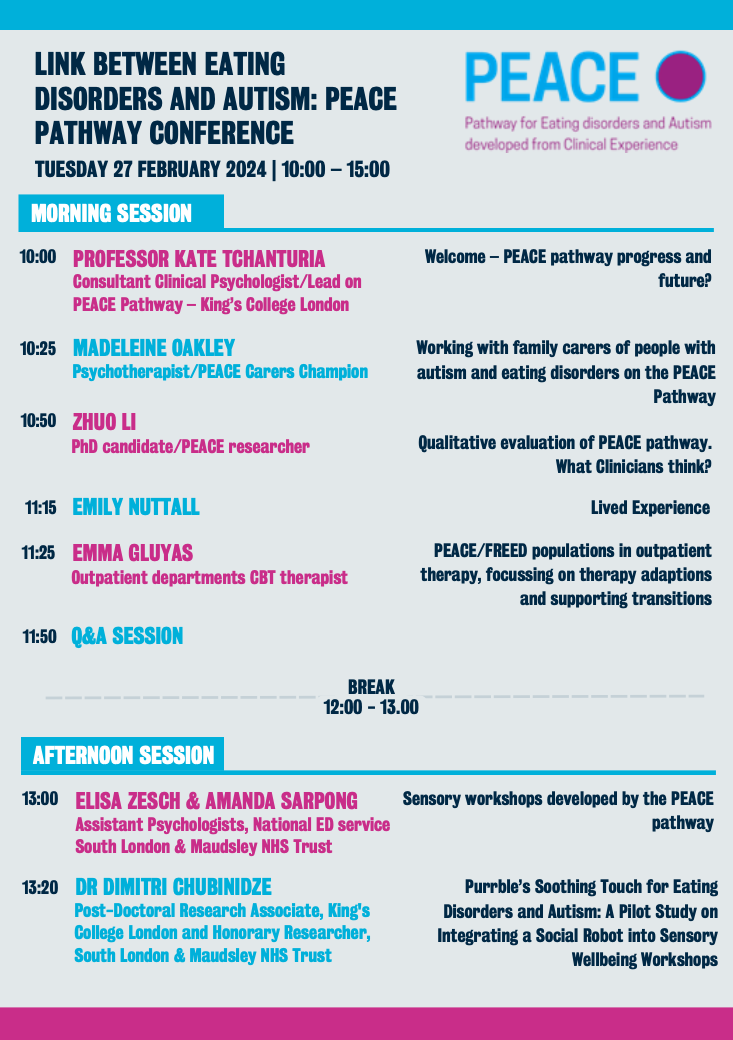
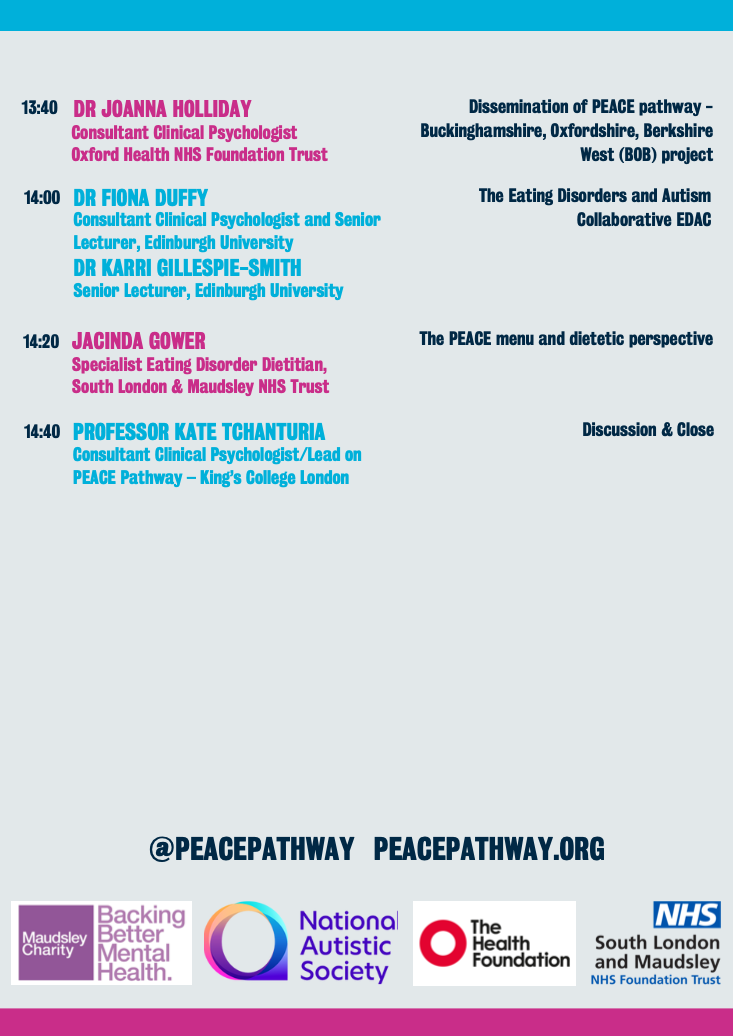
Thank you to everyone who contributed to making this year's conference a success. Together, let's continue to advance understanding and support for autistic individuals with eating disorders.
You might find these interesting too!
Join us online on 20 May 2026 for the PEACE Pathway Conference: Neurodiversity and Eating Disorders. The conference will explore the evolution of the PEACE Pathway toward a neurodivergent-informed service model and share insights from clinical practice, research, and co-production within eating disorder services.
Robert shares his and his wife’s experience and advice in caring for a child with autism and an eating disorder.
A neurodiversity-informed guide for patients with an eating disorder, with a focus on autism and ADHD. This resource offers practical information and strategies grounded in lived experience and clinical expertise.